
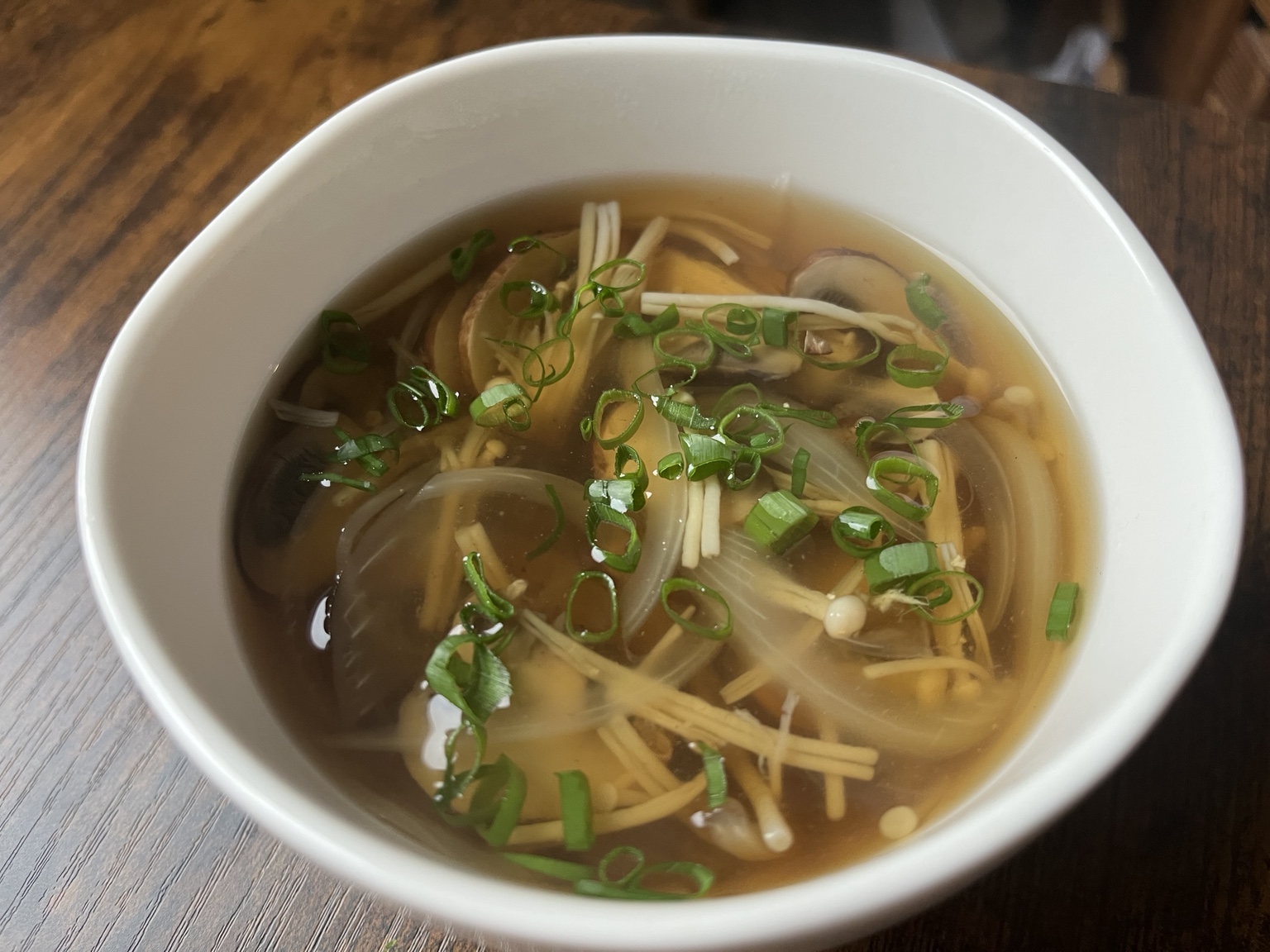


Udon-Suppe mit ChinakohlNapa Cabbage Udon Soup

Chinakohl und Zwiebel werden langsam ganz weich gekocht, sodass ihre natürliche Süße in die mild gewürzte Brühe übergeht. Die Suppe lässt sich bis zum letzten Löffel genießen und ist bewusst leichter gewürzt als eine kräftige Udon-Brühe. Mit 200 g Chinakohl, 200 g Udon und einem Ei ist eine großzügige Schüssel eine sättigende Mahlzeit.Napa cabbage and onion simmer until tender, bringing their natural sweetness into a gently seasoned broth. This is a light soup to enjoy to the last spoonful, rather than a strongly seasoned udon broth. With 200 g of cabbage, 200 g of udon and an egg, one generous bowl makes a satisfying meal.
ZutatenIngredients
- 200 g vorgekochte Udon-Nudeln200 g pre-cooked udon noodles
- 200 g Chinakohl, in feine Streifen geschnitten200 g Napa cabbage, thinly sliced
- 1 kleine Zwiebel1 small onion
- 1 Ei1 egg
- 1–2 Frühlingszwiebeln1–2 spring onions
- 500 ml Wasser500 ml water
- 2 TL Dashi-Granulat2 tsp granulated dashi
- 1 EL Sojasauce1 tbsp soy sauce
- 2 TL Weißwein2 tsp white wine
- 1 TL Honig1 tsp honey
- 1/2 TL Zucker1/2 tsp sugar
- Eine Prise SalzA pinch of salt
ZubereitungMethod
- Das Ei vorbereiten. Das Ei vorab weich oder wachsweich kochen und bis zum Servieren beiseitelegen.Prepare the egg. Boil the egg beforehand until the yolk is still soft or semi-soft. Set aside until serving.
- Das Gemüse vorbereiten. Den Chinakohl in feine, mundgerechte Streifen schneiden. Die Zwiebel in dünne Scheiben schneiden. Die weißen und hellgrünen Teile der Frühlingszwiebeln von den dunkelgrünen Teilen trennen. Die weißen und hellgrünen Teile zum Mitkochen schneiden; die dunkelgrünen Teile in feine Ringe schneiden und für das Topping aufbewahren.Prepare the vegetables. Cut the napa cabbage into thin, bite-sized strips. Thinly slice the onion. Separate the white/light-green parts of the spring onions from the darker green parts. Cut the white/light-green parts for cooking with the vegetables. Thinly slice the darker green parts into rings and reserve for topping.
- Die Suppe ansetzen. 500 ml Wasser, 2 TL Dashi-Granulat, 1 EL Sojasauce, 2 TL Weißwein, 1 TL Honig, 1/2 TL Zucker und eine Prise Salz in einen Topf geben. Chinakohl, Zwiebel und die weißen und hellgrünen Teile der Frühlingszwiebeln hinzufügen.Make the soup. Add 500 ml water, 2 tsp granulated dashi, 1 tbsp soy sauce, 2 tsp white wine, 1 tsp honey, 1/2 tsp sugar and a pinch of salt to a pot. Add the napa cabbage, onion and white/light-green parts of the spring onions.
- Das Gemüse sehr weich kochen. Köcheln lassen, bis Chinakohl und Zwiebel ganz weich und zart sind. Der Chinakohl soll hier nicht knackig bleiben: Seine Flüssigkeit und die natürliche Süße des Gemüses sollen in die Brühe übergehen. Die fertige Brühe soll mild gewürzt sein, sodass man sie als Suppe genießen kann, statt wie eine kräftige Nudelsauce zu schmecken.Cook the vegetables until very soft. Simmer until the napa cabbage and onion are very soft and tender. Do not try to keep the cabbage crisp: its moisture and natural sweetness should become part of the broth. The finished broth should be gently seasoned and mild enough to enjoy as a soup, rather than a strongly seasoned noodle sauce.
- Die Udon separat kochen. Während das Gemüse köchelt, die Udon in einem separaten Topf nach Packungsanweisung kochen. Gut abtropfen lassen.Cook the udon separately. While the vegetables simmer, cook the udon in a separate pot according to the package instructions. Drain well.
- Die Udon in der Suppe erwärmen. Die abgetropften Nudeln zu Gemüse und Brühe geben. Alles etwa 30 Sekunden bis 1 Minute gemeinsam erwärmen, bis die Nudeln heiß sind und sich mit der Suppe verbunden haben. Die Nudeln nicht lange weiterkochen.Finish the udon in the soup. Add the drained udon to the vegetables and broth. Warm everything together briefly, about 30 seconds to 1 minute, just until the noodles are hot and have mingled with the soup. Do not cook the noodles for a long time.
- Servieren. Udon, Gemüse und reichlich Brühe in eine Schüssel geben. Das weich gekochte Ei halbieren und darauflegen. Mit den beiseitegelegten Frühlingszwiebelringen bestreuen.Serve. Transfer the udon, vegetables and plenty of broth to a bowl. Halve the soft-boiled egg and place it on top. Finish with the reserved spring onion rings.
Über die Udon-NudelnAbout the udon
Für dieses Rezept empfehle ich vorgekochte Udon-Nudeln, da sie in nur wenigen Minuten zubereitet sind. Diese Udon-Nudeln von REWE Beste Wahl habe ich bei REWE gefunden. In letzter Zeit habe ich ähnliche abgepackte Udon-Nudeln aber auch in anderen deutschen Supermärkten gesehen.For this recipe, I recommend pre-cooked udon because it only takes a few minutes to prepare. I found these REWE Beste Wahl udon noodles at REWE, and recently I’ve also seen similar packaged udon noodles in other German supermarkets.

Die Nudeln nach Packungsanweisung separat kochen und gut abtropfen lassen. Anschließend kurz in die fertige Suppe geben und darin erwärmen.Cook the noodles according to the instructions on the package. I like to cook them separately first, drain them, and then add them to the soup briefly at the end.
Tipp:Tip: Bei diesem Rezept bleibt etwas Brühe übrig. Bewahre sie für den nächsten Tag auf und genieße sie einfach als Suppe. Über Nacht kommt der Geschmack von Chinakohl und Zwiebel noch stärker zur Geltung – die Brühe schmeckt dann noch süßer und intensiver nach Gemüse.This recipe leaves you with some extra broth. Keep it for the next day and enjoy it as a soup on its own. Overnight, the flavors of the napa cabbage and onion become even more noticeable, making the broth taste sweeter and more vegetable-rich.
